At first glance they look related, with their deep cocoa colour and the way they are cut into squares once cooled, yet the American brownie and our Romanian negresă come from different cultures and rely on distinct techniques. Each answered the same simple wish in its own way: a homemade cake rich in chocolate, baked in an ordinary tray.
How the brownie began: Chicago, 1893
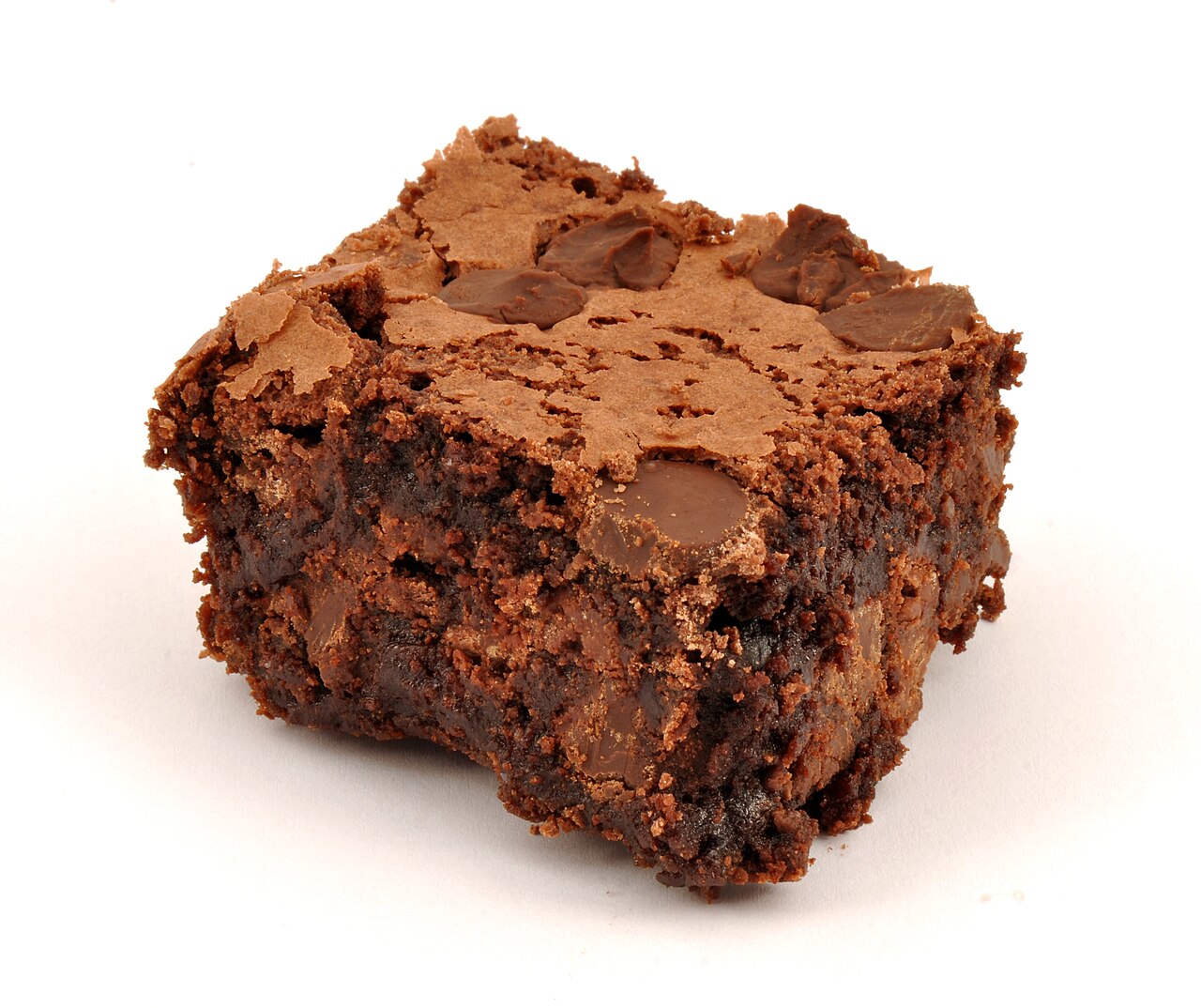
History records the first brownie in 1893, at the Palmer House hotel in Chicago. Bertha Palmer, the owner's wife and president of the Board of Lady Managers at the World's Columbian Exposition, asked the pastry cooks for a practical dessert for the ladies' lunch boxes: a cake with the texture and taste of a chocolate torte, yet easy to eat without crumbling.
The result was a dense mixture of melted chocolate, butter and plenty of walnuts, topped with a thin apricot glaze. The glaze was simple: apricot preserves, water and a little gelatine, boiled together for a minute and brushed on warm. The idea came from classic European pastry, where a chocolate cake was brushed with warm apricot jam, as with the Sachertorte. The glaze sealed the cake so it would not dry out in the lunch boxes, and the tartness of the apricot balanced the sweetness of the chocolate and butter. The hotel still serves this brownie today, made from the same recipe.
Two milestones that shaped the modern recipe
In the decades that followed, the brownie became a staple of American baking, and the search for the ideal texture, dense, moist in the middle and with a fine crust on top, produced two formulas that became classics:
1. Katharine Hepburn (1984, The New York Times): the actress left a simple, firm recipe built on drastically reducing the flour: only a quarter cup (about two or three tablespoons) for a whole tray. The cake stays heavy and chocolatey, without the airiness of a sponge.
2. Alice Medrich (2003, in the book Bittersweet): the author changed the classic view of the dessert by showing that the finest brownie does not necessarily need melted chocolate, but pure cocoa powder combined with butter and granulated sugar. By controlling the fat and the sugar crystals separately, she achieved a remarkably velvety texture and a glossy, slightly crisp top.
From here also comes a small pastry secret used by many home bakers: putting the hot tray straight into the freezer or onto an ice bath right after it leaves the oven. The thermal shock instantly stops the residual baking inside, setting a dense, creamy centre without drying the edges.
In modern kitchens, well-known chefs have added personal touches: Gordon Ramsay scatters pieces of dark chocolate over the batter halfway through baking to create molten pockets, while Jamie Oliver uses dried sour cherries to balance the sweetness with a tangy note.
The classic recipe: Alice Medrich's cocoa brownie
For those who want to try the formula that redefined this dessert in the United States, here are the original quantities published by Alice Medrich for a 20 × 20 cm square tin:
From Mirela's cookbook · after Alice Medrich's recipe
Cocoa brownie
one 20 × 20 cm tin
Ingredients
- 140 g unsalted butter
- 250 g granulated sugar
- 80 g unsweetened cocoa powder
- ¼ teaspoon salt
- ½ teaspoon vanilla extract
- 2 cold eggs (from the fridge)
- 65 g plain flour
- Optional: 65 g finely chopped walnuts
Method
- 1
Melt the butter, sugar, cocoa and salt together over a bain-marie, stirring now and then, until you get a smooth, hot, glossy paste.
- 2
Take the bowl off the heat and let it cool until just warm.
- 3
Add the vanilla, then the cold eggs one at a time, stirring well after each with a spoon or spatula.
- 4
Finally add the flour and stir briefly and vigorously (about 40 strokes) until the batter turns smooth and glossy.
- 5
Pour into the tin lined with baking paper and bake at 160°C for 20-25 minutes.
Serving
Let it cool completely before slicing.
Our negresă: culinary folklore without an author
Unlike the brownie, the Romanian negresă has no known author and no officially recorded birth date. It is a folk cake, passed on by word of mouth and through notebook pages copied from one generation to the next, from neighbours or work colleagues.
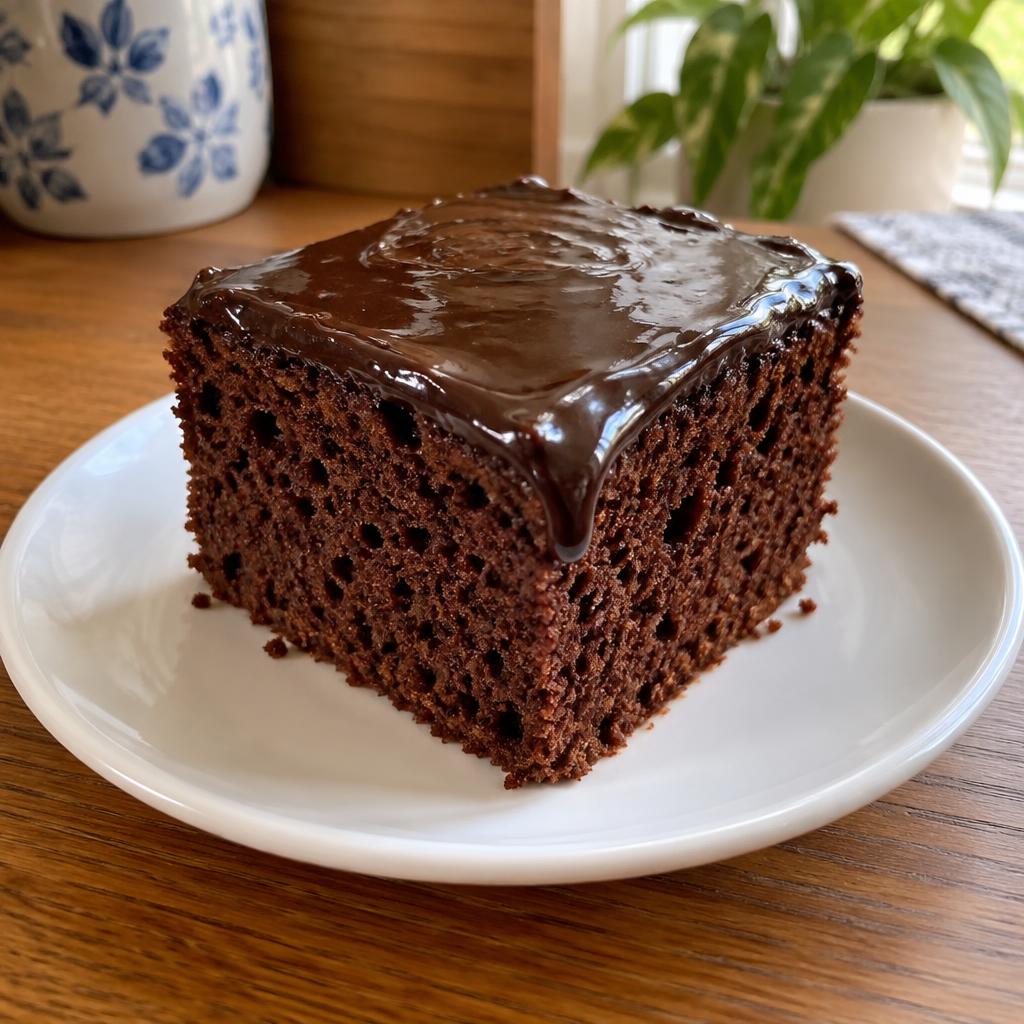
In structure, homemade negresă is closer to a sponge batter, lighter, fluffier and nicely risen in the tray, with countless variations of its own:
Fasting negresă: a clean, ingenious solution for periods of dietary restriction. With no eggs and no dairy, its tender texture relied on plum butter or sour cherry jam, walnuts, cocoa, oil and sparkling water, with baking soda. The acidity of the jam helped the batter rise, and the cake stayed soft and fragrant for several days.
Negresă with glaze: an ingenious home method in which butter, milk, sugar and cocoa were first boiled briefly into a chocolate glaze. A cup of it was set aside on a saucer, and the eggs, flour and baking powder were added to the rest. After baking, the reserved glaze was poured over the cake, giving it a generous, glossy topping without needing a second pan or shop-bought ingredients.
Beyond these, every family kitchen has its small adaptations: with cherries from compote set into the batter, with toasted walnuts or with a little coffee added to the mixture.
Both the brownie and the negresă need patience after baking: cooling completely (either slowly or briefly sped up in the freezer for a denser centre) is the essential step for the texture to settle and the slices to cut cleanly.
Whichever version we prefer, both are delicious in their own way, and the choice depends only on the moment and on each person's taste: sometimes we want the dense texture of a brownie with a strong coffee, other times the softness of a homemade sponge-style negresă with a generous glaze.
And because the very first brownie in history holds a special place, I will share all its secrets and the original Palmer House recipe, apricot glaze and all, in the next article.
Bibliography and sources
- The Palmer House Hilton Archives & Chicago History Museum (1893): record of the first brownie recipe for Bertha Palmer.
- The New York Times (July 2003, Marian Burros): publication of Katharine Hepburn's original recipe.
- Alice Medrich, Bittersweet: Recipes and Tales from a Life in Chocolate (Artisan Books, New York, 2003): the study of cocoa powder, the Best Cocoa Brownies recipe and the thermal shock cooling technique.
- Gordon Ramsay, Bread Street Kitchen: the World's Best Brownies recipe.
- Jamie Oliver, Cook with Jamie (Michael Joseph, 2006): the Bloody Brilliant Brownies recipe.
- Silvia Jurcovan, Carte de bucate (Editura Tehnică, Bucharest, 1975 edition): the section on quick homemade cocoa batters.
The recipe is presented in independent wording, based on the ingredients and method published by Alice Medrich.
Warmly,
Mirela C